Lipo Sculpt · Non-surgical aesthetics

Cryolipolysis Stoulton Explained How Does Fat Freezing Work?

Understanding the science, treatment process and what to consider before choosing cryolipolysis.
Also known as fat freezing, it is a Lipo Sculpt non-surgical procedure that uses controlled cooling to target fatty tissue beneath the skin.
The technology has developed from research into how fat cells respond to cold temperatures and is now used in certain body-contouring treatments.
Unlike weight-loss programmes, cryolipolysis targets localised areas of subcutaneous fat rather than reducing overall body weight.
At Lipo Sculpt, we believe understanding a treatment is key to making an informed decision. This guide explains how cryolipolysis works, what the procedure involves, its limitations and the potential risks.
Cryolipolysis Fat freezing Stoulton

Start with a conversation.

Understand your options before deciding on treatment.

Consultation first

Time to discuss suitability and ask questions.

A plan around you

Treatment options explained for your circumstances.

Convenient home visits

Subject to treatment and local availability.

What Is Cryolipolysis - Fat Freezing Stoulton?

Cryolipolysis is a non-invasive body-contouring procedure that uses controlled cooling to affect fat cells beneath the skin.
 
The term combines three scientific concepts:
Cryo: Relating to cold temperatures.
Lipo: Relating to fat.
Lysis: The breakdown or destruction of cells.
 
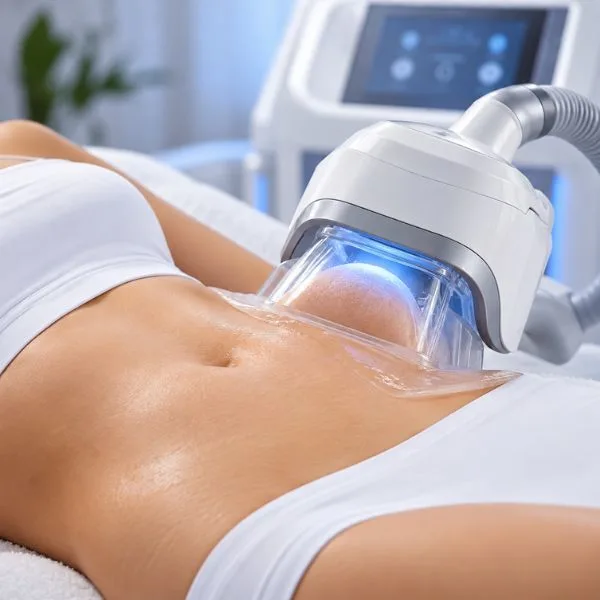
During treatment, a specialised applicator is positioned over subcutaneous fat. Depending on the equipment used, suction may draw the tissue into the fat-freezing applicator while controlled cooling is applied.
 
Fat cells are more sensitive to some cooling conditions. The procedure exploits this difference, although it still carries risks to the skin and surrounding structures.
 
Cryolipolysis is a cosmetic body-contouring procedure. It is not a treatment for obesity, a substitute for weight management, or a way to improve overall metabolic health.

How Was Fat Freezing Discovered?

Cryolipolysis began with observations that cold exposure could affect fatty tissue.
Researchers investigated a condition known as popsicle panniculitis, in which cold exposure was associated with changes in children’s fatty tissue.
These observations spurred further research into whether controlled cooling could selectively affect fat cells without requiring surgery.
Over time, this research led to the development of cryolipolysis devices designed for cosmetic body contouring.
Modern systems use controlled cooling technology, but the treatment settings, applicators and approved uses can differ between devices.
Understanding the history of cryolipolysis helps explain the scientific principles behind the procedure, but it does not mean every fat-freezing device has the same clinical evidence or safety profile.
Cryolipolysis 1 1

How Does Cryolipolysis Work?

Cryolipolysis works on the principle that fat cells respond differently to controlled cooling than other tissues.
The treatment process generally involves several stages.

Positioning the Applicator

Place an applicator against the selected treatment area.
Some devices use suction to draw a fold of fatty tissue into the applicator, while others use different contact methods.
The treatment area, applicator and settings depend on the equipment and the individual’s assessment.

Controlled Cooling

The applicator cools the tissue beneath the skin.
The cooling is intended to affect the fat cells within the treated area.
The procedure does not physically remove fat during the appointment, and it should not be confused with liposuction.

Cellular Response

Controlled cooling can trigger a biological process that injures and kills susceptible fat cells.
The body then responds to the affected tissue through its normal inflammatory and cellular-clearance processes.

Changes Over Time

Changes associated with cryolipolysis develop gradually, not immediately.
Visible changes may take several weeks or months to appear, and responses vary.
Some people may notice a change in the treated area’s contour, while others may see little or no improvement.
There is no guarantee of a particular cosmetic outcome.

Your treatment journey

What Happens to Fat Cells After Cryolipolysis?
A common question is what happens to fat cells after controlled cooling.
Cryolipolysis is intended to damage susceptible fat cells, which can then break down.
Over time, the body’s immune and clearance mechanisms respond to the affected cells and tissue.
This is a gradual biological process. It does not mean fat is immediately removed from the body or that a person will experience measurable weight loss.
The procedure does not prevent remaining fat cells from increasing in size in the future.
Changes in body weight, health, lifestyle and individual physiology may continue to affect body composition and appearance.
Is Cryolipolysis the Same as Weight Loss?
No. Cryolipolysis and weight loss are different concepts.
Weight loss generally refers to a reduction in overall body weight. Nutrition, physical activity, medication, health conditions, and other factors can influence it.
Cryolipolysis targets a localised area of subcutaneous fat.
It does not address visceral fat, which lies deeper in the abdomen around internal organs.
It is also not a treatment for obesity or a replacement for balanced nutrition, regular physical activity and appropriate medical care.
Understanding this distinction matters when deciding whether the procedure aligns with your expectations.

A considered approach

Which Areas May Be Considered for Fat Freezing?
cryolipolysis fat freezing areas Stoulton
Depending on the equipment used and the individual’s suitability, cryolipolysis may be considered for certain areas of localised subcutaneous fat.
Areas commonly associated with cryolipolysis devices include:
  • Abdomen
  • Flanks or sides of the waist
  • Thighs
  • Upper arms
  • Back or bra-line area
Not every device is intended or suitable for every body area.
Treatment availability for a particular area depends on the device’s intended use, the amount and distribution of fatty tissue, skin condition, and other individual factors.
A consultation is necessary before deciding whether an area may be suitable.
What Happens During a Fat Freezing Appointment?

The exact procedure varies by device and treatment plan.

Before Treatment

The practitioner should discuss your medical history, the proposed treatment area, relevant contraindications, and your goals.

You should also have the opportunity to ask about the equipment, practitioner training, possible side effects, alternatives and costs.

During Treatment

The applicator is positioned against the selected area, and the equipment delivers controlled cooling according to its protocol.

You may experience sensations such as pulling, pressure, intense cold, tingling or discomfort.

These sensations vary by individual and device.

Treatment duration depends on the system being used and the planned area.

After Treatment

The treated area may appear red or feel tender, swollen, bruised or temporarily numb.

Some people experience discomfort that continues after the appointment.

Your practitioner should explain what to expect, what symptoms require further assessment and any relevant aftercare instructions.

Does Fat Freezing Stoulton Hurt?
Experiences vary. Some people describe an initial sensation of cold, suction, pressure or pulling. Others may experience aching, stinging or discomfort during or after treatment.
Temporary numbness can occur, and in some cases, altered sensation may continue for several weeks.
Cryolipolysis should not be described as completely painless.
An appropriate healthcare professional should assess any persistent, severe or unexpected symptoms.
What Are the Possible Side Effects and Risks?
Although cryolipolysis does not involve surgical incisions, it is not risk-free.
Possible effects include:
  • Redness and swelling
  • Bruising and tenderness
  • Pain or discomfort
  • Temporary numbness or altered sensation
  • Skin discolouration
  • Temporary lumps or nodules
  • Cold-related skin injury, including burns
  • Persistent changes in sensation
A less common but important complication is paradoxical adipose hyperplasia (PAH).
PAH occurs when fatty tissue in the treated area increases rather than decreases, producing a firm, visible enlargement.
It may develop months after treatment, does not normally resolve on its own and may require surgical assessment or intervention.
Other complications can occur, including injury to surrounding tissues.
Discuss the potential benefits, limitations, and risks before treatment, and allow sufficient time to decide whether to proceed.
Who May Not Be Suitable for Cryolipolysis?
Cryolipolysis is not suitable for everyone.
Certain medical conditions and individual circumstances may make the procedure inappropriate or require further medical assessment.
 
These can include:
  • Cold-sensitive conditions, such as cryoglobulinaemia, cold agglutinin disease or paroxysmal cold haemoglobinuria
  • Certain circulatory or neurological conditions
  • Reduced sensation in the proposed treatment area
  • Broken, inflamed or damaged skin
  • A hernia or weakness in the proposed treatment area
  • Certain surgical scars or abdominal wall conditions
  • Pregnancy, where elective cosmetic treatment should generally be deferred
  • This is not an exhaustive list.
 
Medication, previous surgery, medical conditions and the specific equipment being used may affect suitability.
Where there is uncertainty, medical advice may be required before considering treatment.
Can Cryolipolysis Treat Loose Skin or Cellulite?
Cryolipolysis primarily targets localised subcutaneous fat.
It does not treat loose skin, significant skin laxity, or cellulite.
Several factors influence skin appearance, including age, genetics, collagen, elasticity, body composition, and previous weight changes.
Reducing underlying fat does not necessarily tighten the skin and may, in some cases, make existing laxity more noticeable.
If you’re mainly concerned about loose skin or cellulite, discuss whether other approaches are better suited.
How Long Does It Take to See Changes?
Cryolipolysis does not produce an immediate change in body contour.
The biological response to cooling takes time, and any visible changes generally develop over the following weeks and months.
Improvement timing and extent vary based on individual factors and the equipment used.
Some individuals may not achieve a noticeable cosmetic change.
Avoid relying on guaranteed timelines, percentages of fat reduction, or promises of specific measurements.
Is Fat Freezing Permanent?
Cryolipolysis is intended to affect a proportion of susceptible fat cells within the treated area.
However, describing the cosmetic outcome as permanent can be misleading.
The body continues to change over time, and remaining fat cells can increase in size.
Weight changes, ageing and other factors can influence the appearance of the treated area.
A particular result or its duration cannot be guaranteed.
What Should You Ask Before Choosing Cryolipolysis?
Before considering treatment, it may be helpful to ask:
  • What type of cryolipolysis equipment will be used?
  • Is the device intended for the area being considered?
  • What qualifications and training does the practitioner have?
  • What evidence supports the treatment claims being made?
  • What side effects and complications are possible?
  • Are there any reasons the procedure may not be suitable for me?
  • What alternatives are available?
  • What is the full treatment cost, including any additional charges?
  • What happens if I experience a complication?
You should feel comfortable asking questions and taking time to make a decision.

Your questions, answered

Frequently Asked Questions About Cryolipolysis Stoulton

These answers offer a starting point. Your consultation provides information specific to the treatment and your circumstances.

No. Lipo Sculpt cryolipolysis is a non-surgical procedure that uses controlled cooling rather than incisions or surgical fat removal. However, non-surgical does not mean risk-free.
No. Cryolipolysis targets subcutaneous fat beneath the skin. It does not treat visceral fat located around internal organs.
Cryolipolysis is not a weight-loss treatment. It is intended for localised body contouring and should not be relied upon to reduce overall body weight.
The number of sessions considered depends on the device, treatment area, individual assessment and response. No particular number of sessions or result should be promised before suitability has been assessed.
Advice about returning to normal activities should be based on the procedure performed, any side effects experienced and the practitioner’s aftercare guidance. Seek medical advice if you develop unexpected or concerning symptoms.
Yes. Although controlled cooling systems are designed to manage tissue temperature, cold-related skin injuries, including serious burns, are recognised complications.
No. Certain medical conditions, skin concerns and anatomical factors can make treatment unsuitable. A consultation and appropriate assessment are important before proceeding.

Let's talk about your options

Understanding Your Options with Lipo Sculpt
Choosing a non-surgical procedure is a personal decision, and having accurate information is an important starting point.
At Lipo Sculpt, we focus on discussing the treatment process, suitability, limitations, and risks before you decide.
Cryolipolysis isn’t right for everyone, and we can’t guarantee results.
If you would like to explore whether fat freezing may be an option, contact our team to discuss next steps and ask questions.
Start with a Conversation
Understand the treatment, ask questions, and consider your options before deciding.
This page provides general information about cryolipolysis and is not a substitute for individual medical advice, diagnosis or treatment.